Accelerate IT Procurement with AI-Driven Source-to-Pay Solutions by Penny
Penny’s AI-driven Source-to-Pay platform empowers IT teams to streamline procurement, reduce complexity, and safeguard sensitive data. Focus on innovation and growth while core processes are automated efficiently.
Leverage Penny AI’s advanced Source-to-Pay platform to replace legacy systems and reduce mandatory maintenance. This enables your IT team to focus on innovation and scalability, driving long-term business growth.
Value 01
Enhanced IT agility
Implement Penny AI’s AI-driven Source-to-Pay solutions to increase IT agility, reducing complexity and enabling rapid adaptation to changing business needs. Streamline procurement processes to free up IT resources for strategic initiatives.
Value 02
Robust cybersecurity
Ensure top-tier data security with Penny AI’s AI-driven tools that protect sensitive procurement data from internal and external threats. Regular security audits and compliance with global standards safeguard your organization’s information.
Penny gives supply chain teams one system to manage sourcing, suppliers, orders, and receiving, with real-time visibility that helps them keep goods flowing, reduce disruptions, and make faster decisions.
How does Penny integrate with our existing systems?
Penny connects with ERP and accounting systems through API connections and flexible file exports, keeping procurement data in sync across platforms without disrupting existing workflows or duplicating data entry.
How does Penny handle security?
As a cloud-based system, Penny provides secure, controlled access with role-based permissions and a complete audit trail, so IT can govern who sees and does what while keeping procurement data protected.
Does Penny require complex infrastructure to deploy?
No. Penny is cloud-based, so there is no heavy infrastructure to set up or maintain. Teams can access it securely from anywhere, and deployment is fast compared with legacy on-premise systems.
How does Penny help replace legacy procurement systems?
Penny consolidates fragmented, outdated tools into one modern system that is easier to adopt and maintain, reducing the technical debt and support burden that legacy procurement software places on IT.
How much IT effort is needed to run Penny?
Penny is designed to be largely self-service for procurement and finance teams, with an intuitive interface and automation that reduce day-to-day IT involvement after the initial setup and integration.
Can IT control user access and roles in Penny?
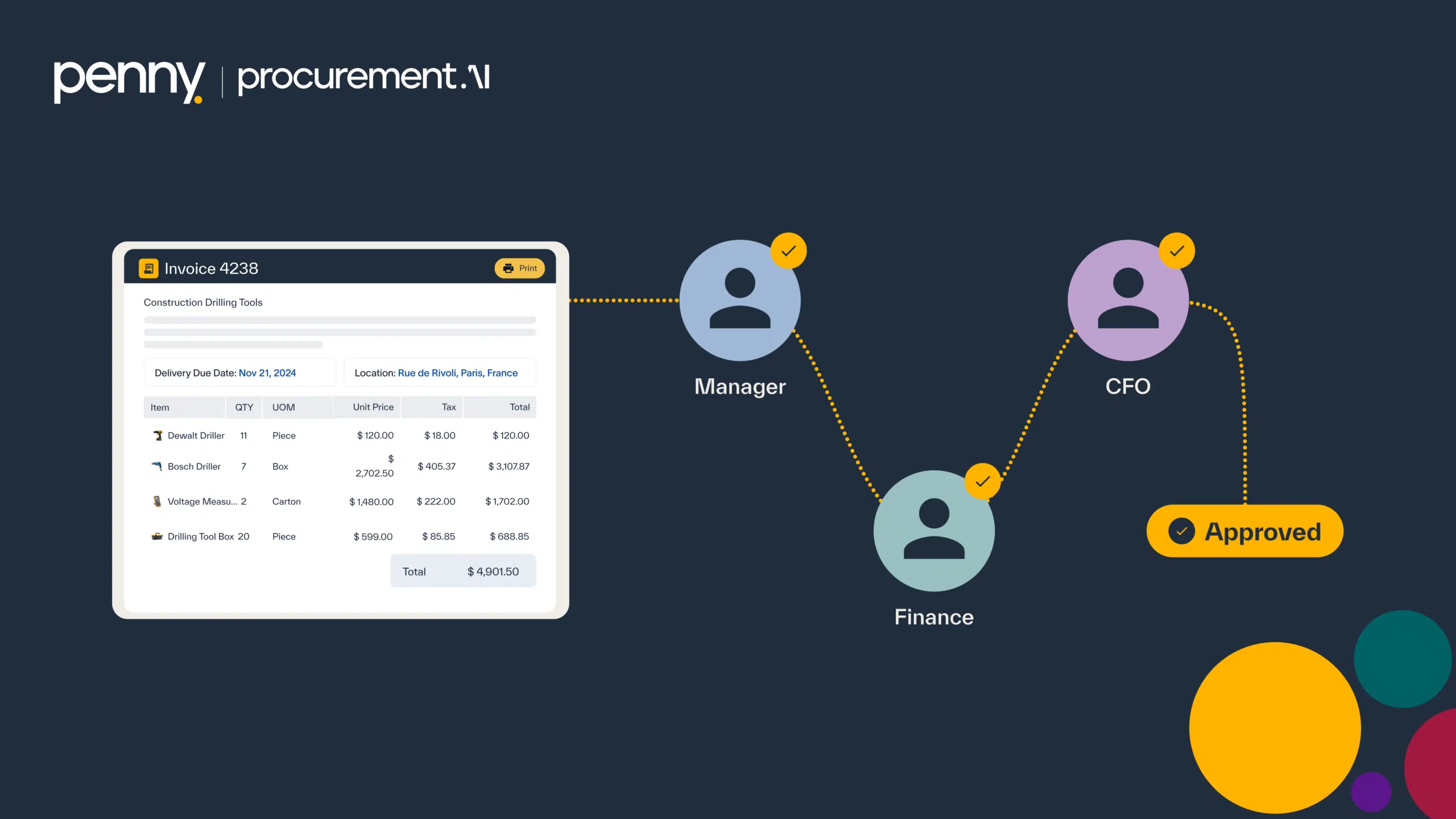
Yes. IT and administrators can manage users, assign role-based permissions, and configure approval workflows, ensuring the right people have the right access while maintaining governance and oversight.
Cookies
This site uses cookies to offer you a better browsing experience. Find out more on how we use cookies and how you can change your settings.