
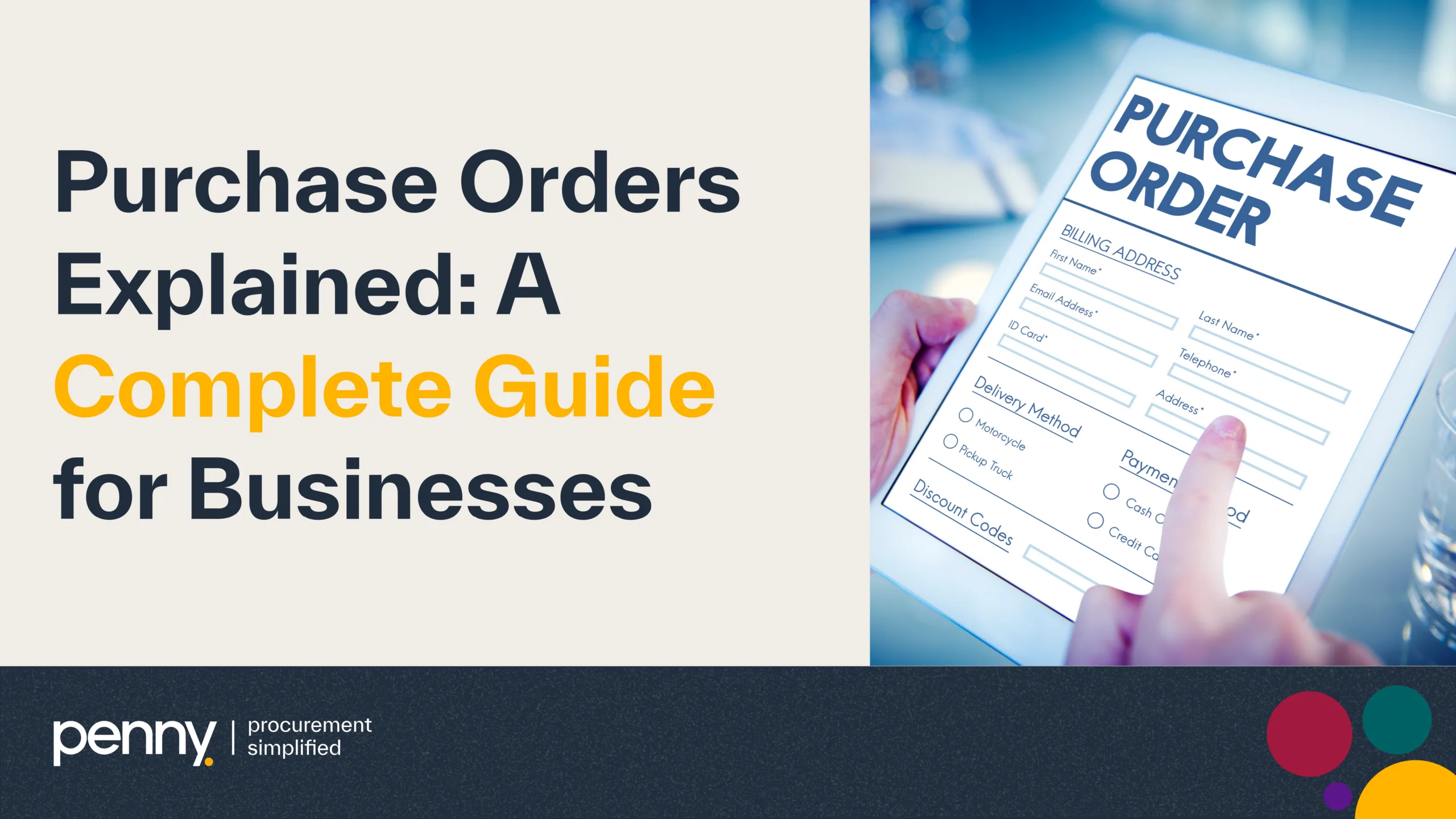
purchase order (PO) is a formal, legally binding document that a buyer issues to a supplier, authorizing the purchase of specific goods or services at agreed quantities, prices, and delivery terms. Purchase orders form the financial backbone of procurement. They create accountability, control spend, and build the audit trail that connects a business need to a committed cost. Without a structured PO process, organizations lose visibility into what they ordered, what they received, and what they owe, opening the door to overspending, duplicate payments, and compliance failures.
Why Purchase Orders Matter More Than Most Businesses Realize
Many organizations, especially growing ones, treat purchase orders as administrative paperwork. Employees send emails to suppliers, receive invoices, and process payments without ever creating a formal PO. It feels faster. It feels simpler.
However, this shortcut creates serious problems at scale. Without purchase orders, finance teams cannot reconcile what was ordered against what was invoiced. Moreover, budget owners cannot see committed spend before it becomes an actual cost. As a result, auditors cannot trace who authorized a purchase or on what terms. Additionally, procurement leaders lose the ability to enforce supplier contracts or negotiated pricing.
According to a SpendHQ survey, 75% of procurement executives doubt the accuracy of the data they present, and 79% of non-procurement executives are only somewhat or not at all confident in using procurement data to make strategic decisions.
The purchase order is not bureaucracy. Instead, it is the control point that connects strategy to execution in procurement.
What a Purchase Order Contains
A well-structured purchase order includes all the information both buyer and supplier need to fulfill a transaction without ambiguity. The core elements are:
- PO number: A unique identifier for tracking and reference across all systems.
- Buyer and supplier details: Legal names, addresses, and contact information for both parties.
- Item descriptions, quantities, and unit prices: The specific goods or services being ordered, with exact specifications.
- Total amount: The sum of all line items, including applicable taxes and charges.
- Delivery date and location: When and where the supplier should deliver goods or services.
- Payment terms: The agreed payment schedule, such as Net 30 or Net 60.
- Terms and conditions: Contractual terms governing the transaction, including warranties and dispute resolution.
Each element serves a distinct purpose. The PO number enables tracking across procurement, finance, and warehouse systems. Item specifications prevent disputes over what a buyer ordered versus what a supplier delivered. Payment terms protect cash flow. Together, these elements create a single source of truth for every transaction.
How the Purchase Order Process Works: Step by Step
The PO process follows a logical sequence from internal need to payment. Understanding each step clarifies where delays, errors, and savings opportunities typically arise.
- Purchase requisition. An employee or department raises an internal request, specifying what they need, the estimated quantity, and the budget. This pre-purchase stage is where most spend decisions actually get made.
- Approval workflow. The system routes the requisition through approval chains based on value thresholds, department, or category. Automated workflows eliminate the email chains and delays that slow down manual processes.
- Vendor selection and sourcing. The procurement team identifies the right supplier, either from an approved vendor list or through a sourcing event such as an RFQ (Request for Quotation). This step ensures competitive pricing and compliance with supplier policies.
- PO creation and issuance. Once approved and sourced, the team generates the purchase order with all relevant details and sends it to the supplier. Upon acceptance, the PO becomes a legally binding agreement.
- Goods receipt. When the supplier delivers, the receiving team confirms that items match the PO in quantity, specification, and condition. Any discrepancies get flagged immediately for resolution.
- Three-way matching. The team compares the PO, goods receipt, and supplier invoice. Three-way matching ensures the organization only pays for what it ordered, received, and correctly invoiced, one of the most critical financial controls in procurement.
- Payment processing. Once matched, the finance team approves the invoice for payment according to the agreed terms. The PO closes when payment completes.
Based on Penny customer data, organizations with manual, email-based PO processes report procurement cycle times 3 to 4 times longer than those using automated workflows.
Types of Purchase Orders
Not all purchases follow the same pattern. As a result, different business needs require different PO structures.
Standard Purchase Orders cover a one-time order for specific goods or services with defined quantities, prices, and delivery dates. Most procurement transactions use this type.
Blanket Purchase Orders (BPOs) cover recurring purchases from the same supplier over a set period. Instead of issuing a new PO for every delivery, the buyer establishes agreed pricing and terms, then releases orders against the blanket as needed. This approach suits office supplies, maintenance materials, and other repeat-buy categories.
Planned Purchase Orders support known future requirements where the delivery schedule is still tentative. They commit the organization to a supplier and pricing but allow flexibility on exact delivery timing, useful for project-based procurement where timelines shift.
Contract Purchase Orders establish the terms and conditions of a long-term agreement without specifying exact quantities or delivery schedules. Buyers make individual releases against the contract as needs arise, combining the flexibility of a framework agreement with the governance of a formal PO.
Choosing the right PO type reduces administrative overhead and strengthens supplier relationships. Organizations that rely solely on standard POs for everything often generate unnecessary volume and slow down their own processes.
Purchase Orders vs. Invoices: Understanding the Difference
One of the most common points of confusion in procurement is the difference between a purchase order and an invoice. They look similar but serve fundamentally different purposes.
A purchase order comes from the buyer before the transaction. It communicates: “This is what we want to buy, at this price, delivered by this date.” In other words, it is a commitment to purchase.
An invoice, by contrast, comes from the supplier after delivery. It communicates: “This is what we delivered, and this is what you owe.” Essentially, it is a request for payment.
The PO governs the terms. The invoice triggers the payment. Three-way matching connects them by verifying that the invoice aligns with both the PO and the goods receipt — so the organization only pays for what it authorized and received. Without this link, businesses become vulnerable to overpayments, duplicate invoices, and fraud.
The Hidden Cost of Managing Purchase Orders Manually
Many organizations still manage purchase orders through email, spreadsheets, and phone calls. On the surface, this appears simple and cost-free. In practice, however, it is neither.
Low-value purchase automation reduces processing costs by up to 70% per transaction. That means for every PO a team processes manually, the organization spends far more than necessary on administrative overhead alone.
Beyond processing cost, manual PO management creates several compounding problems. First, version confusion arises when teams email PO files back and forth with no single source of truth. Second, delayed approvals stall purchases for days when paper-based or email-based chains slow the process. Third, missing audit trails leave no clear record of who approved what, when, or why. Finally, maverick spend increases as employees bypass the PO process entirely because it is too slow or cumbersome.
According to the Hackett Group, companies lose 10 to 20% of their targeted savings due to maverick buying, with world-class procurement teams reporting 60% less savings leakage compared to their peers by reducing off-contract purchasing and improving contract compliance.
How Penny Helps Businesses Automate and Control Purchase Orders
Penny’s cloud-based e-Procurement platform digitizes the full purchase order lifecycle, from requisition to approval, sourcing, PO issuance, goods receipt, and payment, in one connected system. No ERP dependency. No spreadsheet workarounds.
- Automated approval workflows route requisitions and POs through the right approvers instantly, based on value thresholds, department, and category, eliminating email bottlenecks.
- Centralized PO tracking gives procurement leaders and finance teams real-time visibility into every open, pending, and completed purchase order across the organization.
- Built-in 3-way matching compares POs, goods receipts, and invoices automatically, reducing errors and protecting against overpayment.
- AI-powered document capture extracts data from uploaded offers and invoices in any format, automatically populating fields and detecting duplicate charges before they reach payment.
- Full audit trail logs every action, approval, and change, giving compliance teams and auditors the transparency they need without manual record-keeping.
- Supplier collaboration connects buyers and vendors on one platform, streamlining PO acknowledgment, delivery updates, and invoice submission.
Most Penny customers go live within 6–8 weeks and save an average of 6.11% in direct costs and 27.5% in cost avoidance, starting with the most fundamental control point in procurement: the purchase order.
Frequently Asked Questions
Q: What is a purchase order in simple terms?
A: A purchase order (PO) is a formal document issued by a buyer to a supplier, authorizing the purchase of specific goods or services at agreed prices, quantities, and delivery terms. Once accepted by the supplier, it becomes a legally binding agreement.
Q: What is the difference between a purchase order and a purchase requisition?
A: A purchase requisition is an internal request raised by an employee to buy something. A purchase order is the external, authorized document sent to the supplier after the requisition has been approved. The requisition triggers the process; the PO executes it.
Q: Why is 3-way matching important for purchase orders?
A: Three-way matching compares the purchase order, the goods receipt, and the supplier invoice to ensure all three align. This prevents overpayment, duplicate invoices, and payment for undelivered goods. Companies that automate 3-way matching According to the Institute of Finance and Management (IOFM), AP automation reduces AP workload by up to 80% and speeds up financial close by 25%
Q: What happens if a company does not use purchase orders?
A: Without purchase orders, organizations lose spend visibility, budget control, and audit traceability. This leads to maverick spending, duplicate payments, invoice disputes, and compliance risks. Research shows that companies with structured PO processes save significantly more than those relying on informal purchasing.
Q: How long does it take to automate the purchase order process?
A: Cloud-based procurement platforms like Penny can digitize the full PO lifecycle within 6–8 weeks. Teams can start with core PO automation and approval workflows, then expand into sourcing, supplier management, and AP automation over time.
Final Thought
The purchase order is the most fundamental control point in procurement. It connects what the business needs to what it spends. It creates the visibility that finance depends on. It provides the audit trail that compliance requires.
Organizations that treat POs as paperwork miss the point. Those that treat them as strategic infrastructure build the financial discipline, supplier accountability, and operational speed that separate high-performing procurement teams from the rest.
Request a demo with Penny to see how automated purchase order management delivers visibility, control, and savings across your entire procurement cycle.