Tail Spend Management for Non-Profits
Non-profit procurement attracts attention at the big end: the major grant-funded contract, the annual supplier agreement, the capital purchase that goes to the board. The small purchases rarely get the same scrutiny. Yet they happen constantly, across every team, and together they add up to real money and real risk.
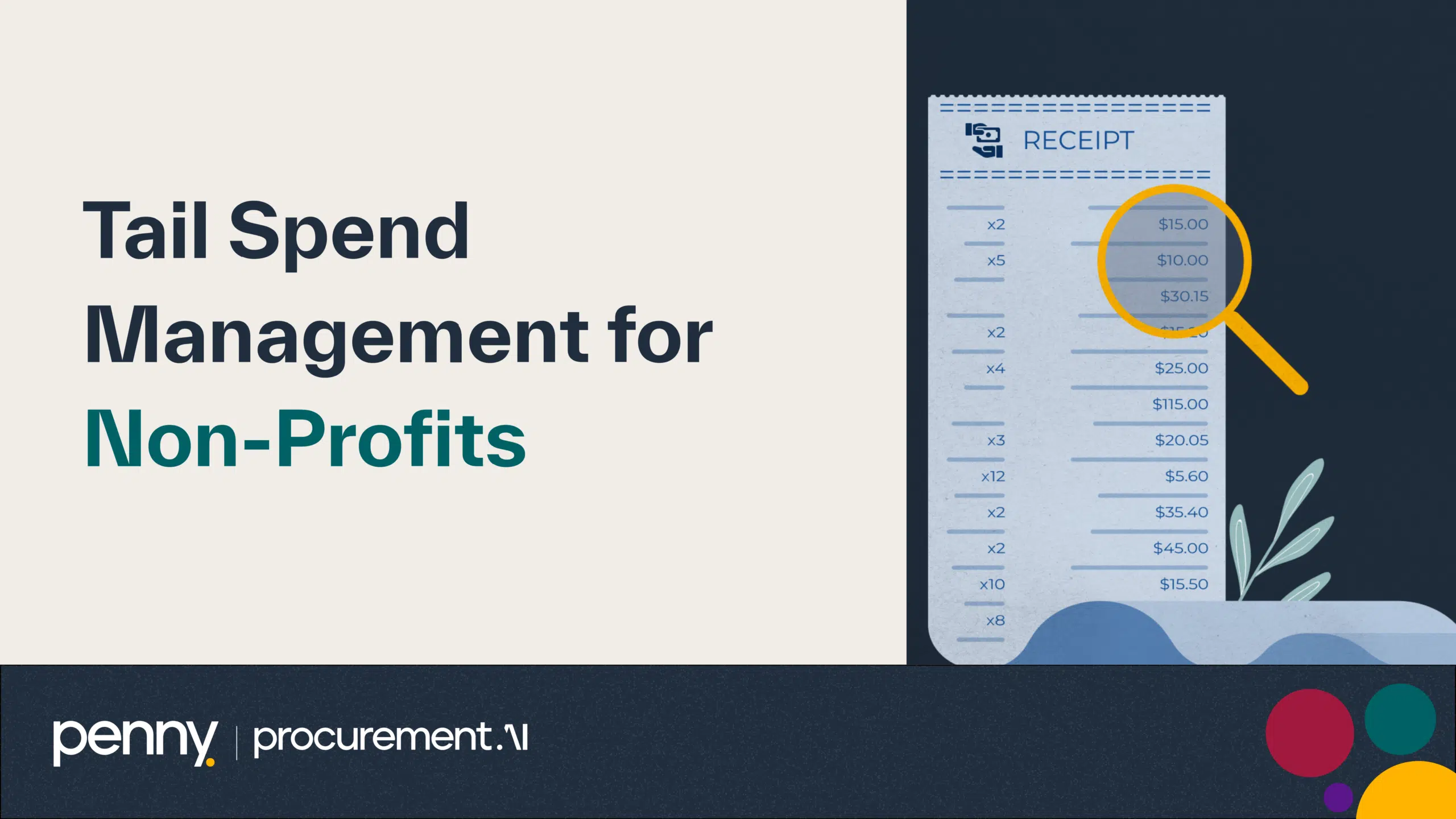
That category has a name. Tail spend management for non-profits is the process of controlling, automating, and optimizing the many low-value, high-volume purchases that sit outside traditional procurement oversight. Tail spend usually accounts for around 20 percent of what an organization spends while generating roughly 80 percent of its individual transactions. Think office supplies, small services, ad-hoc technology needs, and event costs. Managing it well helps non-profits stretch limited resources, meet donor restrictions, and see the decentralized purchasing that quietly erodes budgets.
Why Tail Spend Matters for Non-Profits
Non-profits work under budget constraints and accountability requirements that few businesses face. Grants, donations, and government funding all demand careful tracking and reporting. Unmanaged tail spend creates fraud and compliance exposure. It also wastes savings opportunities and generates administrative drag. Without a clear process for these small, numerous expenses, organizations struggle to meet grant restrictions and stay audit-ready. Demonstrating stewardship to stakeholders becomes harder too. A structured approach lets finance and procurement leaders redirect savings toward mission-critical programs while keeping every expenditure transparent.
Core Challenges in Non-Profit Tail Spend
- Lack of visibility: Decentralized purchasing through manual processes or informal channels hides spend patterns and suppliers.
- Administrative burden: High transaction volumes create manual work for finance, which raises costs and slows reporting.
- Maverick spend: Staff bypass procurement policy to speed up small purchases, which raises compliance and reputational risk.
- Supplier fragmentation: Frequent use of new or unvetted suppliers for minor purchases creates risk and forfeits volume discounts.
- Limited negotiation power: Small, scattered transactions stop organizations from using their total spend to win better terms.
Key Elements of Effective Tail Spend Management
- Centralized procurement system: Unifies purchasing workflows regardless of transaction size. Organizations can set guidelines, approvals, and preferred suppliers even for low-value items.
- Automated approval workflows: Streamline authorization for small purchases. Delivery speeds up while compliance and audit trails hold.
- Supplier onboarding and management: Ensures even one-off suppliers get vetted and recorded, which reduces risk and informs future sourcing.
- Integrated spend analytics: Aggregates and categorizes spend data so finance leaders can spot repeat purchases and consolidate suppliers.
- Automated purchase order generation: Documents each transaction as it happens, which makes reporting, audits, and funding compliance far less labor-intensive.
Practical Steps for Non-Profits
| Step | Action | Outcome |
|---|---|---|
| 1. Assess current state | Map every small purchase process and identify common categories and suppliers | Pinpoints inefficiencies and uncovers savings opportunities |
| 2. Define policies and controls | Set clear approval thresholds, preferred suppliers, and documentation requirements | Reduces maverick spend and supports audit compliance |
| 3. Implement a digital procurement system | Choose a system that captures all purchases, automates workflows, and integrates analytics | Increases visibility and reduces manual work |
| 4. Train stakeholders | Show staff and volunteers how proper purchase routing supports mission success and compliance | Improves adoption and reduces rogue spend |
| 5. Monitor, analyze, optimize | Use analytics to spot patterns, negotiate with recurring suppliers, and refine policy | Drives continuous improvement in cost management |
How Penny AI Supports Tail Spend Management for Non-Profits
The Penny AI system helps non-profits automate and control tail spend without losing agility. Centralized workflows bring every purchase into one place, including the low-value, high-frequency transactions that usually escape oversight. Teams apply custom approval rules and supplier requirements that suit their organization. Penny AI streamlines supplier onboarding, generates purchase orders automatically, and integrates spend analytics for full visibility. Finance and procurement teams cut manual effort, lower risk, and redirect savings to mission-focused work. Digitized processes and enforced accountability let non-profits manage tail spend with the rigor of strategic sourcing, at a scale that fits their size.
Frequently Asked Questions
What is tail spend in non-profit procurement?
Tail spend covers the low-value, high-volume purchases made outside structured procurement processes. Typical examples include office supplies, small services, and event materials. Each purchase is minor, but they happen constantly.
Why is managing tail spend important for non-profits?
Good tail spend management stretches limited resources, strengthens compliance with donor and grant requirements, and improves audit readiness. It also surfaces savings and reduces the risks that come with maverick spend and unvetted suppliers.
What are the main risks of unmanaged tail spend?
Unmanaged tail spend leads to overspending, missed savings, compliance breaches, and fraud exposure. Audits become harder. Financial reporting loses accuracy, and donor or regulator trust can erode.
What is maverick spend and how does it relate to tail spend?
Maverick spend describes purchases made outside established procurement processes. It overlaps heavily with tail spend, because small, ad-hoc purchases often skip proper approval and supplier vetting.
What is the first step to improving tail spend management?
Start by assessing current processes and mapping where tail spend happens. Understanding existing patterns shapes the policies you write and the tools you choose.
Conclusion
Tail spend is easy to ignore precisely because no single transaction looks worth the attention. A box of supplies here, a small contractor there. The problem only becomes visible in aggregate, usually during an audit or a grant review, when someone asks where the money went and the answer takes weeks to assemble. For mission-driven organizations, that is a costly way to find out. Bringing small purchases into the same system as everything else changes the picture. Approvals follow policy, suppliers get vetted once, and the data stays ready for whoever asks. Every amount recovered from unmanaged spend is one more resource available for the work the organization exists to do.