Ask an employee how to buy something at their company, and the answer often depends on who you ask. One person emails procurement directly. Another fills in a form they found on the intranet. A third messages a colleague who “knows how it works.” Each route produces different information, different approvals, and different outcomes. Procurement teams then spend their days chasing details that should have arrived with the request.
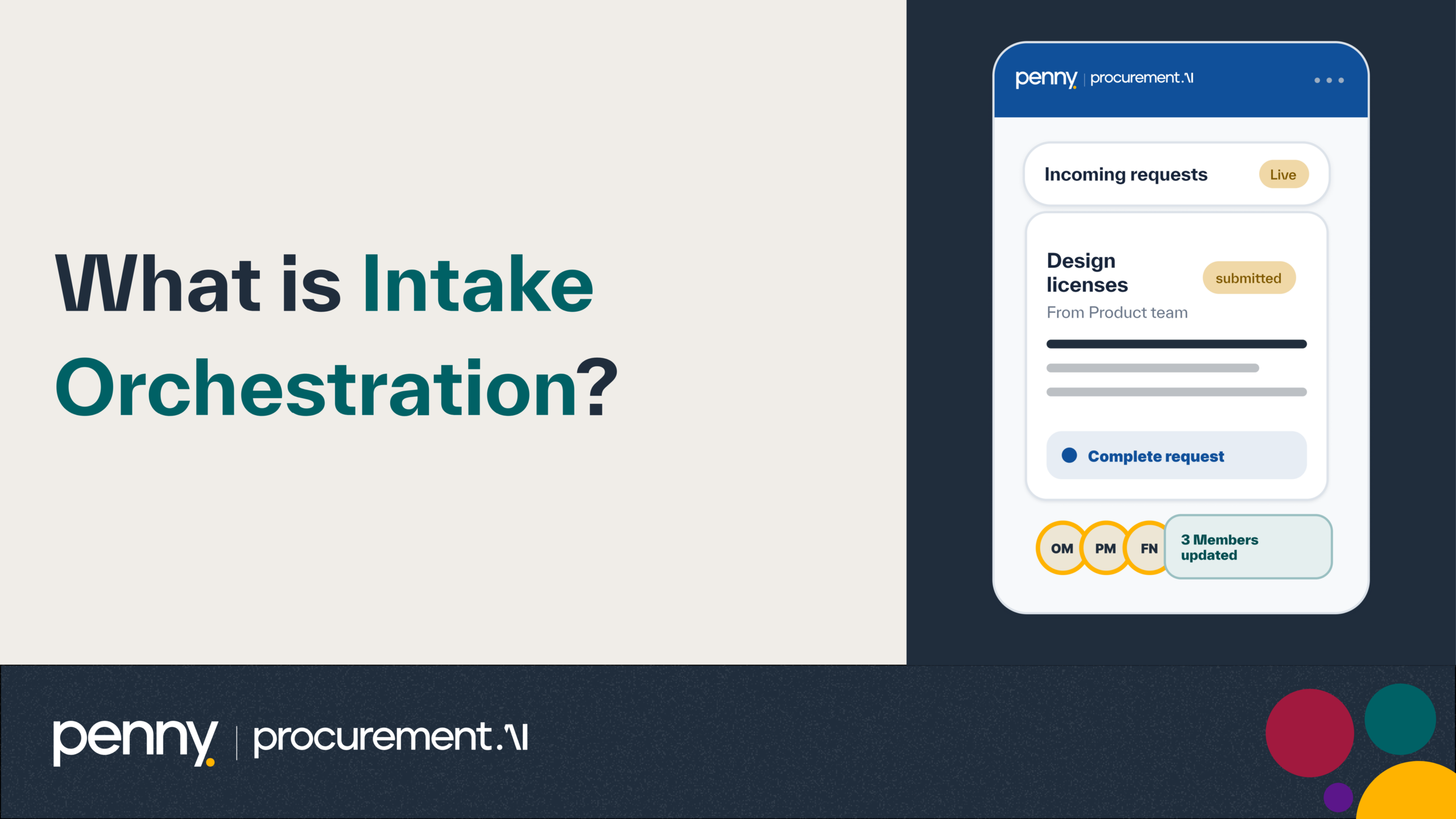
Intake orchestration fixes that front door. It is the systematic management and routing of every procurement-related request through one digital interface. That covers purchasing, sourcing, contracts, and supplier onboarding. With intake centralized, the system categorizes each request, assigns it to the right workflow, and checks it against policy. All of that happens before the request becomes a formal procurement event. Intake orchestration bridges decentralized business needs and standardized procurement processes. Control, auditability, and transparency arrive with the first click.
Why Intake Orchestration Matters
Procurement requests come from every corner of an organization. Each department has its own requirements, its own sense of urgency, and its own idea of what procurement needs to know. Without a standard intake process, that fragmentation becomes expensive. Maverick spend grows, bottlenecks form, and data gets lost before procurement ever sees the request. Compliance turns inconsistent, because the checks depend on which route the requester happened to take.
Intake orchestration captures, routes, and processes every request according to policy. Data quality rises, cycle times shorten, and governance holds. For procurement leaders, the gains show up as process efficiency and better spend visibility. Stakeholders also stop treating procurement as an obstacle.
The Core Components
Every intake orchestration approach rests on a few connected pieces. The first is a unified request portal, a single front door for sourcing, purchasing, contract, and supplier requests. Nothing gets lost in an inbox, and nothing lands in the wrong category.
Behind that portal sits automated routing. Workflows direct each request based on category, value, risk, or department, then assign the right approvals and next steps without anyone sorting them by hand. Integrated policy controls work alongside the routing. They check each request against spend thresholds, preferred supplier lists, and compliance rules before anything reaches procurement.
Intake orchestration also connects directly to the workflows that follow. A request flows into sourcing, supplier onboarding, purchase orders, or contracts as one continuous digital process. Real-time visibility ties it together. Requesters, procurement teams, and managers can all track status, spot delays, and pull audit-ready reports on where every procurement event began.
How It Changes the Procurement Process
Traditional intake runs on ad hoc emails, manual forms, and isolated ticketing systems. Intake orchestration replaces them with a digital, rules-based layer that sits at the start of the procurement process. Every request follows the same standard path, whether it covers direct spend, indirect materials, service contracts, or supplier information.
The contrast with the old way is sharp. Traditional intake relies on email and spreadsheets, while orchestrated intake uses one central portal. Manual assignment gives way to automated routing and approvals. Requesters who once had no idea where their request stood now get real-time status updates and notifications. The high risk of maverick spend and process leakage gives way to enforced policy and audit readiness. And instead of incomplete, low-quality data, procurement receives structured intake data that flows straight into the workflows downstream.
Process variation drops, approvals move faster, and stakeholders align more easily. Intake analytics also give procurement a steady source of insight for continuous improvement.
How Penny AI Solves Intake Orchestration
Penny AI has its own built-in Intake Orchestration module. The front door to procurement is a native part of the system, not a separate tool bolted on top. Every request enters through one policy-driven portal, whether it concerns a purchase, supplier onboarding, or a sourcing event. Penny AI workflows assign each request to the right category, apply budget and supplier controls, and route it through approvals matched to the organization’s hierarchy and risk profile.
The system logs all intake activity for audit purposes, and stakeholders receive real-time updates as their requests move forward. Intake connects natively to the sourcing, supplier, purchasing, and contract workflows that follow. A well-formed request becomes a well-formed procurement event without anyone re-entering data. The module scales with complex organizations, which makes it a strong foundation for broader procurement transformation.
Frequently Asked Questions
What types of requests can intake orchestration handle?
Intake orchestration captures any procurement or supplier need and routes it to the right process. That could be a purchase requisition, a sourcing event, supplier onboarding, or a contract request.
How does intake orchestration improve compliance?
It embeds policy checks, approval thresholds, and compliance rules directly into the intake workflow. The system reviews every request against company policy before it moves forward. Maverick spend and non-compliant purchasing drop sharply.
What impact does it have on procurement cycle times?
Intake orchestration automates request routing and approvals. Manual intervention drops, bottlenecks disappear, and the time from request to order or sourcing event shortens. The business gets what it needs faster.
Can intake orchestration integrate with existing procurement or ERP systems?
Yes. Modern intake orchestration solutions such as Penny AI integrate with procurement and ERP systems. Data stays consistent from the first request onward, and teams avoid re-entering the same information in multiple places.
Does intake orchestration support different workflows for different categories?
Yes. Teams can configure category-specific workflows that route requests, apply the relevant policy rules, and trigger the right sourcing, onboarding, or contracting actions for each spend or supplier type.
Conclusion
Most procurement problems start before procurement ever sees them. A request arrives with missing details, skips an approval, or names a supplier nobody vetted. The team then spends the next week cleaning it up. Intake orchestration moves the fix to where the problem begins. One front door, clear routing, and policy checks at the point of request mean procurement receives work it can act on immediately. Requesters get a simple, predictable experience. Procurement gets clean data and fewer exceptions. Leadership gets visibility into demand from the moment it appears. For organizations serious about procurement governance, the front door is the logical place to start.