

Procurement teams are not short on reports. They are short on timely insight. As procurement environments become faster and more complex, static reports fail to support real decision-making. Live procurement data enables organizations to see risks early, control spend continuously, and act before issues escalate. This shift is now a defining capability of high-performing procurement teams.
Procurement Has a Reporting Problem, Not a Data Problem
Most procurement teams already generate monthly spend reports, quarterly supplier reviews, and annual audit summaries. Despite this, leaders still question why overspending occurs, why risks are discovered too late, and why procurement issues appear unexpectedly. The problem is not the number of reports being produced. The problem is that reports describe events after they have already happened.
Reports are historical by nature. They explain the past but do not guide action in the present.
What Live Procurement Data Actually Means
Live procurement data refers to continuously updated, system-generated information that reflects procurement activity as it happens. It provides real-time visibility into sourcing activity, supplier responses, spend against budget, and compliance signals. Unlike traditional reports, live data does not depend on manual consolidation or end-of-period processing. It exists within the workflow and updates automatically as actions occur.
This allows procurement teams to understand the current state of procurement at any moment, not weeks later.
The Real Difference Between Reports and Live Data
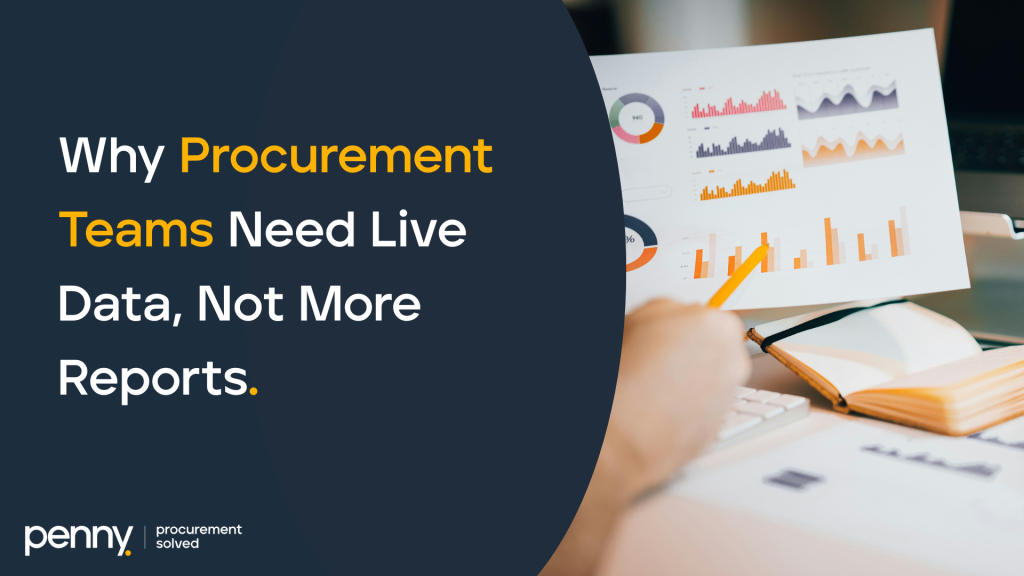
Procurement reports are designed to summarize completed activity. Live procurement data is designed to support ongoing decisions. Reports are periodic and reactive, while live data is continuous and proactive. Reports explain what happened, whereas live data highlights what is happening and signals what action may be required next.
This distinction is why organizations are shifting away from report-driven procurement management.
Why Reports No Longer Work in Modern Procurement
Procurement risks evolve faster than reporting cycles. Supplier delays, price changes, compliance gaps, and demand fluctuations do not wait for month-end closure. When procurement teams rely on reports, risks surface too late and corrective action becomes expensive. Live data allows early detection and intervention before issues escalate.
At the same time, finance leaders increasingly expect continuous visibility. CFOs and executives want predictable cost control and fewer surprises. Procurement reports, by definition, are backward-looking. Live procurement data aligns procurement with financial planning, forecasting, and governance expectations.
As organizations scale, manual reporting also becomes a bottleneck. As sourcing volume increases and supplier networks expand, manual consolidation introduces delays and blind spots. Live data scales automatically with procurement activity.
How Live Data Changes Procurement Decisions
During sourcing, live data enables procurement teams to see supplier participation in real time, identify weak competition early, and adjust strategies before deadlines close. During supplier selection, teams can compare suppliers continuously across price, compliance, and delivery criteria, reducing bias and improving decision confidence. After award, live data supports continuous spend monitoring and early detection of deviation from budgets or contracts.
This transforms procurement from a reactive function into a real-time control mechanism.
How Procurement Technology Enables Live Data
Live procurement data is only possible when procurement processes are fully digitized. Procurement technology enables this by embedding data capture directly into sourcing, approvals, purchasing, and supplier engagement.
When procurement is managed through email and spreadsheets, data is fragmented and delayed. When managed through an integrated digital platform, data is generated automatically and remains available in real time.
This is how procurement moves from reporting to control.
How Penny Helps Customers Move From Reports to Live Data
Penny is designed to support this shift. By digitizing the full Source-to-Pay process, Penny ensures that procurement data is captured automatically at every step. Sourcing activity, supplier engagement, approvals, and purchasing generate structured data by default, without manual effort.
This allows procurement teams to gain live visibility into activity, spend, and compliance, identify issues early, and support finance with accurate, up-to-date insight. Instead of reacting at month-end or year-end, teams can act in the moment.
Final Thought
Procurement does not need more summaries. It needs earlier signals and the ability to act on them. Reports describe the past. Live data shapes future outcomes.
Organizations that adopt live procurement data reduce risk, improve financial control, and build stronger leadership trust. Those that rely on reports will always be responding too late.