
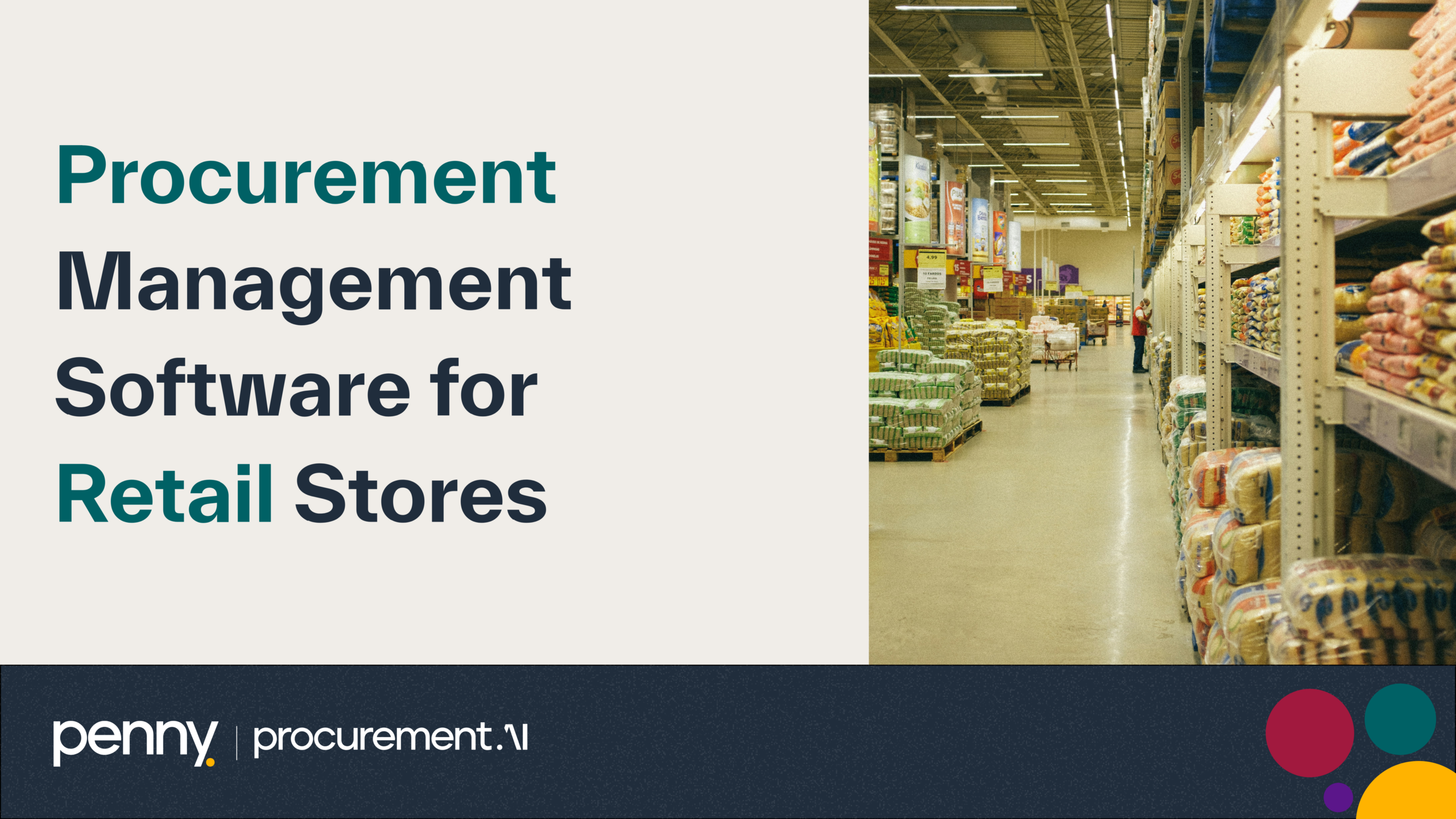
Procurement management software for retail stores is a digital platform that automates the full purchasing cycle, from purchase requisitions and supplier quotes through order approval, goods receipt, and invoice reconciliation. Unlike general procurement tools, retail focused platforms connect tightly with inventory and point of sale systems, giving real time stock visibility and multi store control. The result is fewer stockouts, protected margins, and purchasing decisions based on data instead of guesswork.
Why Manual Procurement Quietly Erodes Retail Margins
Manual procurement in retail runs on spreadsheets, phone orders, and hand reconciled invoices. Each of those steps introduces delay, human error, and small margin leaks that are easy to miss one at a time.
As a retailer scales across multiple outlets, those small inefficiencies compound. Stockouts increase. Overstock ties up cash. Spending goes uncontrolled, and negotiation leverage with suppliers quietly disappears.
A meaningful share of retail brands report inventory accuracy below industry benchmarks. That gap between what a system shows and what is actually on the shelf is exactly where stockouts, overstocks, and margin erosion start.
Core Capabilities of Retail Procurement Management Software
A platform built for retail needs to cover more than basic purchase orders.
End to end purchase management. Requisitions, approvals, order dispatch, goods receipt, and invoice reconciliation all run inside one unified system.
Automated purchase requisitions and reorder rules. Custom minimum stock levels by item, category, or outlet trigger requisitions automatically once inventory drops below a threshold.
Supplier and vendor management. A centralized workspace tracks fill rates, on time delivery, and rejections, compares quotes, and enforces approved vendor lists.
Margin and cash flow visibility. Every purchase order links to cost, selling price, and target margin, so a supplier price change shows its downstream impact immediately.
Three-way purchase order reconciliation. Matching supplier invoices against the purchase order and the goods received note helps catch discrepancies before payment goes out.
Approval governance and audit trails. Multi-level approval workflows based on value, category, or location help limit maverick spend and support auditability.
Centralized multi store procurement. One login manages procurement for every outlet, with budgets and access controls set at the outlet level.
Real time analytics. Dashboards tracks spend by supplier, category, and outlet, along with order status, budget adherence, and margin variance.
How Procurement Software Reduces Stockouts and Overstocks
Stockouts and overstocking are two sides of the same visibility problem. When inventory levels, sales trends, and supplier lead times all feed one system, reorder alerts and draft purchase orders can trigger before shelves actually run empty.
Retailers can set unique reorder rules per item or category, so fast-moving goods get replenished ahead of demand instead of after a stockout. This removes the guesswork that drives both lost sales and excess working capital tied up in slow moving stock.
Comparing Manual and Automated Retail Procurement
| Procurement Step | Manual Approach | with Procurement Software |
|---|---|---|
| Purchase Requisition | Raised by phone or email, high risk of errors or lost requests | Auto generated by stock thresholds, single system with audit trail |
| Supplier Selection | No comparison or performance tracking | Quote comparison and tracked supplier metrics |
| Purchase Order Issuance | Multiple tools or spreadsheets, no approval control | Centralized creation with multi-level approval before release |
| Receiving Goods | Manual entry, delayed stock updates | Goods receipt posts directly to inventory, triggers three-way matching |
| Invoice Processing | Time consuming reconciliation, missed discrepancies | Automated three-way matching before payment |
| Reporting | Limited, after the fact reporting | Live, multi-dimensional analytics by supplier, item, and location |
What to Evaluate When Comparing Retail Procurement Platforms
A few criteria separate a platform that fits retail from one that was built for a different industry.
Real time inventory integration matters most, since stock levels need to reflect actual receipts immediately, not the next day. Rule based ordering at the item, category, and outlet level should be standard, not an add on. Supplier and contract management needs to live in one portal, covering agreements, credit terms, and compliance tracking. Purchase governance, including configurable approvals and budget tracking, is non-negotiable as a retailer grows past a single outlet. Multi outlet scalability means head office can manage procurement for every location while still allowing outlet level budgets and access.
Top performing procurement organizations consistently deliver a stronger return on investment than their peers, while operating leaner and at lower cost as a percentage of spend. That gap reflects the platform and process choices retailers make, not just the size of the buying team.
How Penny Supports Retail Procurement
Penny follows the procurement process in the sequence retail teams actually use: requisition, sourcing, purchase orders and contract management, goods receipt, invoice processing, and payment. Each stage connects to the next, so stock and spend data never have to be re-entered by hand.
The platform centralizes procurement data across multiple outlets, enforces configurable approval workflows, and integrates with core inventory systems to keep stock counts accurate. Automated reordering, contract enforced supplier selection, and outlet level budget controls help retailers protect margins and maintain visibility over every purchase.
Penny’s product roadmap includes AI powered reordering and demand forecasting capabilities as these features roll out. Today, the platform’s focus is giving retail procurement teams a detailed, auditable record of every transaction, so decisions are based on current data rather than a report from last month.
Frequently Asked Questions
How is procurement management software different from basic purchasing software? Procurement management software covers the full process, including supplier selection, contract and performance management, spend analytics, and demand forecasting. Purchasing software typically handles only transactional steps like issuing orders and processing payments.
Why should retail stores automate procurement? Automation reduces manual errors, speeds up reordering, helps prevent stockouts, and improves margin tracking. It frees staff from paperwork and supports purchasing decisions based on data rather than supplier pressure.
Can procurement software support multi outlet retail chains? Yes. Centralized platforms manage procurement across every outlet, with consolidated ordering, outlet level budget controls, and role-based access for both head office and store level teams.
What supplier management features matter most for retail? An approved vendor list, tracked performance metrics like fill rate and on time delivery, quote comparison, and the ability to block unauthorized suppliers at the purchase order stage all matter for compliance and cost control.
How does three-way purchase order reconciliation work? It automatically matches the supplier invoice against the purchase order and the goods received note. Any mismatch in quantity, rate, or line items gets flagged before payment goes out, which helps reduce the risk of short deliveries and billing discrepancies.
The Bottom Line
Retail margins rarely disappear all at once. They erode through small, repeated gaps between what a system shows and what is actually happening on the shelf and at the register.
Closing that gap comes down to connecting purchasing, inventory, and margin data in one place, so problems surface while there is still time to act on them.
See how Penny helps retailers protect margins and keep stock levels accurate across every outlet. Request a demo to walk through it with our team.